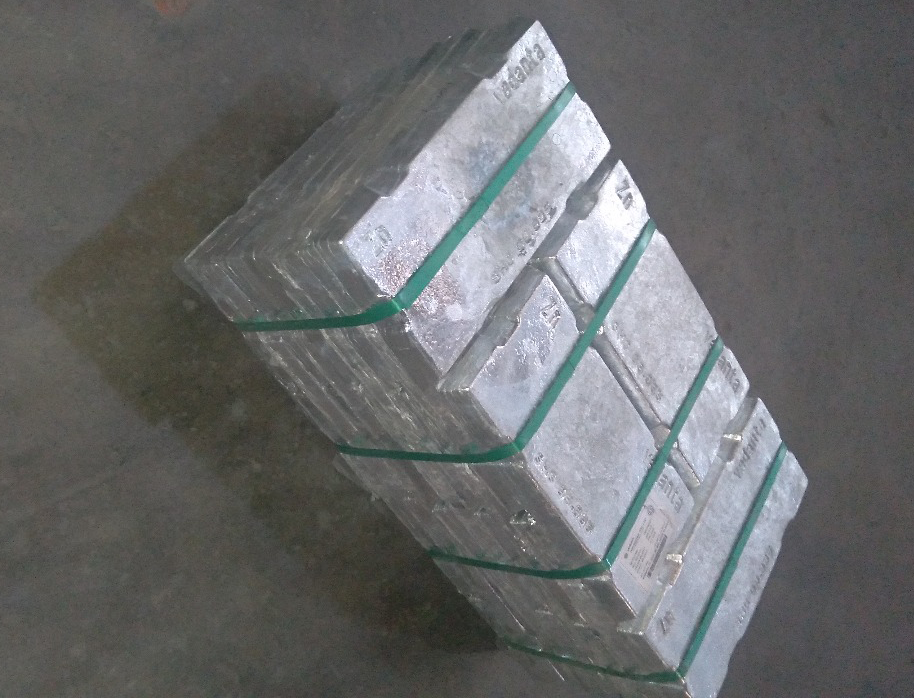
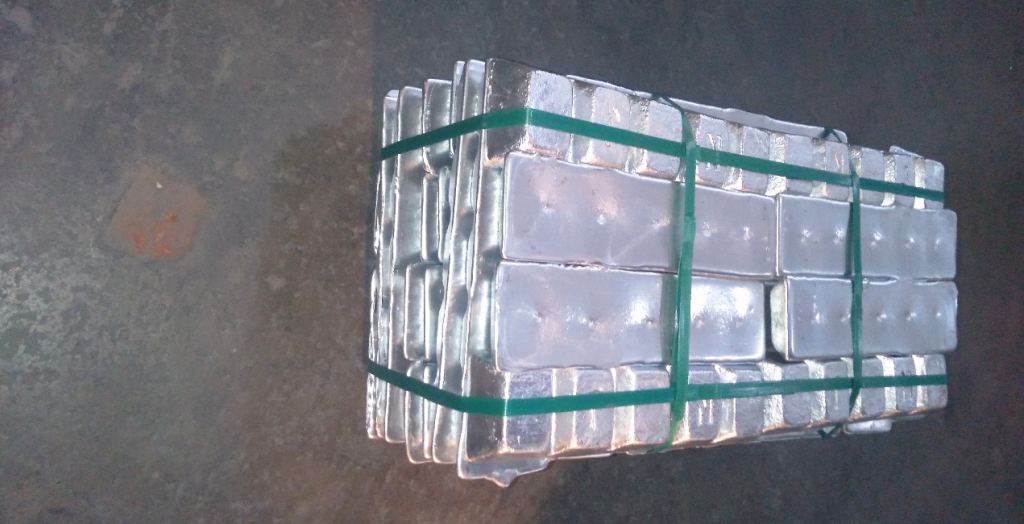
Zinc Alloy

Zinc is used to make many useful alloys. Brass, an alloy of Zinc that contains between 55% – 95% Copper is among the best known alloys. Zinc is alloyed with Lead and Tin to make solder, a metal with a relatively low melting point used to join electrical components, pipes, and other metallic items.

JIS Standard: Zinc Alloy Ingots chemical composition (wt %)

Alloy

Al%

Cu%

Mg%

Fe%

Pb%

Cd%

Sn%

Zn%

Zamak-3

3.9 – 4.3

0.10 max

0.02-0.06

0.1 max

0.003 max

0.003 max

0.001 max

Bal

ZSG -3

3.9 – 4.3

0.5 max

0.02-0.06

0.1 max

0.015 max

0.003 max

0.001 max

Bal

Zamak-5

3.9 – 4.3

0.75 -1.25

0.03-0.08

0.1 max

0.003 max

0.003 max

0.001 max

Bal

ZSG -5

3.9 – 4.3

0.75 -1.25

0.03-0.08

0.1 max

0.015 max

0.003 max

0.001 max

Bal

ZDC-1

3.9 – 4.3

0.75 -1.25

0.03-0.06

0.02 max

0.003 max

0.001 max

0.001 max

Bal

ZDC-2

3.9 – 4.3

0.001 max

0.03-0.06

0.1 max

0.003 max

0.001 max

0.001 max

Bal

ZDC-3

3.9 – 4.3

2.75-3.25

0.02-0.03

0.02 max

0.003 max

0.001 max

0.001 max

Bal

ZA -8

8.0-8.88

0.85-1.0

0.02-0.025

0.05 max

0.003 max

0.001 max

0.001 max

Bal

ZA-12

10.5-11.5

0.85-1.0

0.02-0.03

0.05 max

0.003 max

0.002 max

0.001 max

Bal

ZA-27

25.2-8.0

2.0-2.5

0.01-0.02

0.05 max

0.05 max

0.002 max

0.002 max

Bal

Read More

Aluminum Alloy

An aluminum alloy (aluminum alloy manufacturers) is chemical compositions where other elements are added to pure aluminum in order to enhance its properties, primarily to increase its strength. These other elements include iron, silicon, copper, magnesium, manganese and zinc at levels that combined may make up as much as 15 percent of the alloy by weight. Alloying requires the thorough mixing of aluminum with these other elements while the aluminum is in molten – liquid – form.

Benefit of Aluminum Alloy:

  • Aluminum is a light metal (Metal processors manufacturers), about the third of the density of steel, copper, and brass.
  • Aluminum has good corrosion resistance to common atmospheric and marine atmospheres. Its corrosion resistance and scratch resistance can be enhanced by anodizing.
  • Aluminum has high reflectivity and can be used for decorative applications.
  • Some aluminum alloys can match or even exceed the strength of common construction steel.
  • Aluminum retains its toughness at very low temperatures, without becoming brittle like carbon steels.
  • Aluminum is a good conductor of heat and electricity. When measured by equal cross-sectional area, electrical grade aluminum has conductivity which is approximately 62% of electrical grade annealed copper. However, when compared using equal weight, the conductivity of aluminum is 204% of copper.
  • Aluminum is readily worked and formed using a wide variety of forming processes including deep- drawing and roll forming.
  • Aluminum is non-toxic and is commonly used in contact with foodstuffs.
  • Aluminum can be readily recycled.
Read More